Air can then get to the seed. Hypogeal germination is a type of seed germination which is typical for both the monocot and dicot seeds where the cotyledons remain inside the soil.
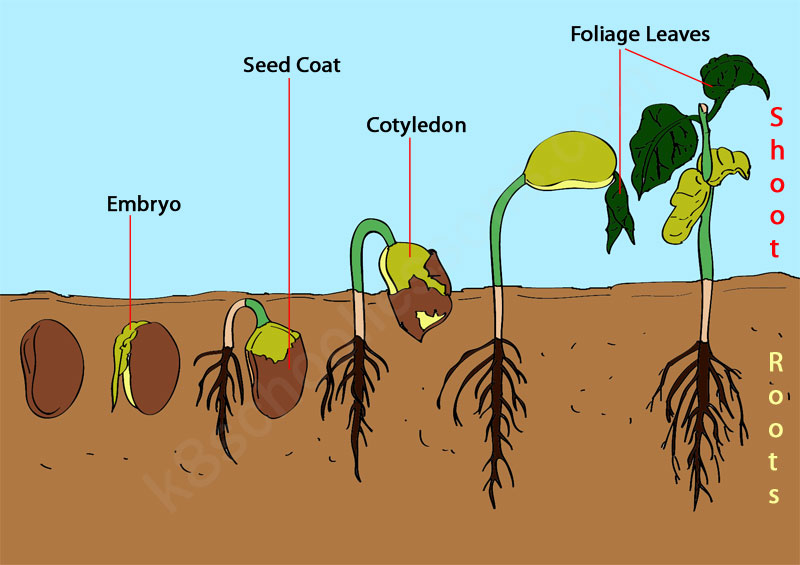
Germination What Is Germination Seed Germination For Kids
So they take in oxygen from the air.

. Seeds need environmental conditions and an optimal. When conditions are right the seed starts to take in water. It can be great biology project ideas.
Different stages of germination. Roots Medium View solution The different stages in the germination of a seed are listed below. Ii The growth and germination of the plumule is delayed.
Seed germination in dicots in which the cotyledons come above the soil surface. As water is taken in the seed swells bigger and bigger until the coat splits apart. Burning the food produces energy.
In the final stage of seed germination the cell of the seeds become metabolically active elongates and divides to give rise to the seedling. L - The first leaves appear M -. During epigeal the cotyledon is pushed out of the soil.
Epigeal germination and hypogeal germination. Iii The hypocotyl forms a loop and then straightens itself to raise the seed above the soil surface. A seed is made up of different parts cotyledon seed coat embryo Seeds sprout into baby plants Common Core.
Once these leaves open up the seed will send roots downward. It is of two kinds. This is a phase where seeds imbibe water from the surroundings.
SL24 Next Generation Science Standards. I Epigeal ii hypogeal iii viviparous i Epigeal germination In this the cotyledons are raised out of the soil and generally become green and photosynthetic. Successful germination depend on several factors occurring in harmony with one another.
Conditions Necessary for Seed Germination. Through this process primary type of root arises from the radicle. The cotyledons do not come out of the soil surface in this category.
Such five changes or steps occurring during seed germination are. SLK3 SLK4 SLK5 SLK6. The redicle comes out and anchors the seed to the soilIt grows and form the primary root.
That shoot will unfurl two tiny cotyledons or leaves and reach for the sunlight. The best time for radish germination is whenever air temperatures enter the 55 to 75 Fahrenheit mark. In this type the hypocotyl elongates and raises the cotyledons above the ground surface it is called as epigeous or epigeal germination.
There are 3 different types of seed germination. The plumule then emerges out of the seed as leaves and the stem straightens up. In both groups the progress of germination is strictly related with the water uptake rate.
Imbibition This is the first step where the seeds starts absorbing water. Respiration Seeds cannot germinate without getting oxygen. Seeds of maize rice.
1 Imbibition 2 Respiration 3 Effect of Light on Seed Germination 4 Mobilization of Reserves during Seed Germination and Role of Growth Regulators and 5 Development of Embryo Axis into Seedling. The cotyledons become dry and fall off. Two types of germination are commonly found in cultivated plants.
Due to the extension of the hypocotyl the cotyledons come above the surface of the soil. In this type of germination the epicotyl elongates and the cotyledons remain below the soil. It better explains water is necessary for germination.
A guide to steps of seed germination process types and stages Essentials for seed germination. After the emerging of the radicle and the plumule shoot starts growing upwards. The seed starts absorbing underground water.
Once the seed eats its lunchbox it will break through the seed coat and sent a tiny root to anchor the plant in the ground. We can make another germination related science experiment. In dicots they are pushed up by rapid extension of hypocotyl before growth of.
The cotyledons a significant part of a seed embryo remains under the soil. Water is a primary factor in seed germination. Also Read Parts of a Seed.
So the oxygen in the air helps the baby plant burn the food packed inside the seed. I The radicle is the first structure to emerge which heads into the soil in the form of hypocotyl. The steps are described or listed below - 1.
When a seed falls onto the soil it receives sufficient water and moisture. There are two methods of seed germination. Different factors affect the Germination of seeds.
The term Hypogeal germination is derived from the ancient Greek word which refers to the below ground. The leaves start making food for the plant. Once the plant is anchored the seed will send up a small shoot.
The stages of germination are- The seed absorbs water and the seed coat bursts. Bean cotton papaya gourd castor and onion have germination of this kind. In this lesson students will identify that seeds germinate and grow into plants.
It will only take between 5 to 10 days for the seedlings to sprout. In the case of the germination of a monocotyledonous plant seed the coleorhiza is the first part to grow out of the seed coat whereas during the germination of a dicotyledonous plant seed the radicle grows out of the seed coat first. Light Seeds have a high intensity response towards light.
Do this experiment in different temperature condition and note. Also you are to sow the seeds about a half-inch to one inch deep and ensure the soil remains in moist condition until the seeds begin to germinate. The majority of seeds are dry and.
In this type of germination the hypocotyl elongates rapidly and arches upwards pulling the cotyledons which move above the soil. The three stages in-between are when the primary root which is called the radicle develops root hairs the first young shoot rises emerges from the soil and the first pair of true leaves form to begin to manufacture food for the plant. During epigeal the cotyledon is pushed out of the soil.
This science experiment is best to explain that different factors necessary for germination. The steps of the germination of seeds are based on the time period and physiological changes.
Explain The Stages Of Germination With The Help Of Diagram

Explain The Stages Of Germination With The Help Of Diagram
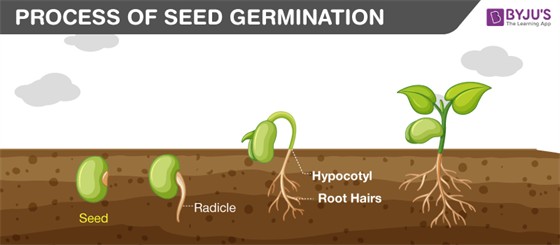
Seed Germination Process Necessity And Its Major Factors



0 Comments